Choosing the Best Memory Care Near Me: A Practical Overview
Business Name: Beehive Homes of Sandy
Address: 9532 S 700 E, Sandy, UT 84070
Phone: (801) 975-5244
Beehive Homes of Sandy
BeeHive Homes of Sandy provides personalized assisted living and memory care in a comfortable residential setting. Our compassionate caregivers deliver attentive daily support focused on dignity, independence, comfort, and quality of life.
9532 S 700 E, Sandy, UT 84070
Business Hours
Finding the ideal memory care neighborhood is seldom a quick duty. For a lot of family members, it begins with a few anxious searches for "memory care near me," complied with by a long night of comparing images, reading reviews, and trying to decode the distinction in between assisted living, dementia assistance, and full memory care. It can seem like a whole lot, specifically when you are doing it while also handling medical professional visits, medicine changes, or the psychological toll of seeing a parent, spouse, or sibling deal with memory loss.
What makes the search harder is that the "finest" place is not constantly the fanciest or the latest. A strong memory care setup is normally the one that fits the person you enjoy, their routines, their level of requirement, and the facts of your family members's day-to-day life. A community that feels warm and attentive for one resident may feel too hectic, also quiet, or also structured for another.
The excellent news is that there is a practical way to review your options. You do not require to be a clinical professional or a senior citizen expert to make a thoughtful choice. You do require a clear feeling of what memory care ought to really supply, what signs to try to find during tours, and where family members frequently find hidden trade-offs just after move-in.
What memory care truly does, and what it must not promise
Memory care is a specific type of senior care made for individuals living with Alzheimer's disease, various other forms of dementia, or similar cognitive modifications that affect day-to-day feature and safety. Good memory care neighborhoods build their regimens, staffing, environment, and activities around those needs. That usually includes protected entrances, predictable schedules, staff learnt dementia communication, assist with bathing and clothing, medication support, and a tranquil setting that reduces confusion.
It should not guarantee to "fix" dementia. Family members sometimes stroll into a tour wishing for peace of mind that the best location will certainly recover the individual they made use of to know. That hope is reasonable, but it sets everybody up for dissatisfaction. The much better concern is whether the community can sustain the person's existing capacities with dignity, and adjust as those capacities change.
I have actually seen family members breathe less complicated once they understand memory care is not regarding taking over a life. It has to do with forming every day life so that it ends up being safer, less frustrating, and a lot more humane. One resident might need cueing for every single action of early morning pet grooming. Another might still delight in selecting clothing but need assistance organizing the wardrobe so that the process does not spiral right into anxiety. The ideal area includes both patterns.
Start with the individual, not the building
When people look for "senior living near me," they commonly start with area, after that tour a couple of communities, after that contrast rates. That is reasonable, yet with memory care, the person's practices and needs ought to lead the decision. An area can be pristine and magnificently decorated, yet still be a bad match if it does not comprehend the resident's cognitive phase or psychological triggers.
Think regarding the person's real day. Do they end up being nervous in noisy rooms? Do they roam in the late mid-day? Are they accustomed to small-group discussion, or do they brighten in a dynamic crowd? Do they consume well in structured setups, or do they require additional prompting to complete meals? These information issue because memory care works best when the environment fits the resident, not when the resident is forced to adjust to a stiff routine.
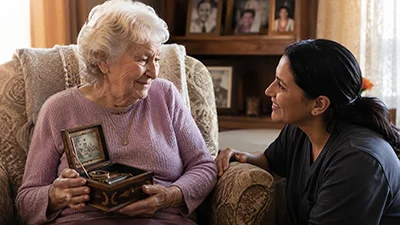
The family tale behind the move matters as well. A child might feel guilty concerning not being able to give adequate supervision at home. A spouse might be tired after months or years of disrupted sleep. Occasionally the decision comes after an autumn, a medical facility remain, or a wandering occurrence that made the dangers impossible to ignore. The right community ought to recognize that history without judgment. An excellent team member will ask about habits, preferences, and stress and anxiety factors, because those information help them take care of the person as a whole human being.
The most important indicators during a tour
A polished internet site tells only part of the story. What you discover face to face usually matters more than any sales brochure. When you visit a memory care neighborhood, pay attention to what the ambience seems like before any individual begins the formal tour. Are locals sitting quietly however pleasantly, or do they seem disengaged? Do personnel welcome people by name? Does the front desk feel open and receptive, or protected and rushed?
One of the greatest indications is just how personnel engage with citizens who are perplexed or repeated. Memory loss typically appears in the exact same question asked six times, in agitation over a misplaced coat, or in a sudden belief that it is time to "go home." The best caretakers do not correct roughly or discuss the resident. They reroute carefully, keep their tone stable, and react with persistence that feels exercised as opposed to performative.
The physical space need to likewise make sense for someone with cognitive decrease. Hallways need to be easy to browse. Signs ought to be clear. Illumination must be soft however enough. Aesthetic clutter can enhance confusion, so a well-designed memory care device often looks calmness without sensation sterilized. Washrooms, typical areas, and bed rooms should really feel instinctive. Small ecological choices, like contrasting colors for doors or simple wayfinding hints, can minimize anxiety greater than families in some cases realize.
Questions that expose whether the community fits
A tour goes better when you ask inquiries that get past the sales pitch. You do not require to fire off a script, yet you do want sufficient details to recognize exactly how the area manages real-life care.
A few concerns worth asking
How does the staff respond when a resident comes to be nervous or attempts to leave the unit? What is the staff-to-resident ratio during the day and overnight? How are care strategies updated when a resident's condition adjustments? What does a common day resemble, from waking with bedtime? How do they support citizens that are still energetic and social versus those that are extra withdrawn?
Those questions issue since memory care is not one-size-fits-all. A community might be outstanding throughout service hours yet slim during the night. An additional might have a wonderful activity program yet struggle to respond promptly when a resident needs toileting aid or becomes distressed. A household when told me they chose a place partly due to the fact that the dining room looked happy, just to recognize later that the evening staffing pattern left their father uncertain after supper, when he was probably to wander and a lot of seeking tranquil redirection. That type of information does not show up in advertising and marketing materials.
Ask concerning medication support, also. If an individual takes several prescriptions, timing matters. It is worth comprehending whether medications are handled internal, exactly how frequently nurses are on website, and how the neighborhood interacts with medical professionals or member of the family regarding adjustments. With elder care, consistency is frequently more valuable than flash.
The difference in between memory care and basic senior care
Many family members contrast memory care with assisted living or wider elder care solutions, which comparison can be helpful. Assisted living supports seniors who need assist with day-to-day jobs but can still browse much of life individually. Memory care is more specialized. It is built for homeowners whose cognitive symptoms impact safety, judgment, and everyday function in manner ins which general senior care may not be geared up to handle.
The difference usually shows up in the tiniest minutes. In assisted living, a resident might be reminded that dinner is at six and expected to bear in mind. In memory care, personnel might assist them to the dining-room, aid them change far from a dealt with thought, and use signs that reduce anxiety. As a whole senior living near me searches, households often pick based upon apartment design or facilities. Those points matter less when memory loss is advanced, due to the fact that the genuine requirement is framework, guidance, and tranquil repetition.
That said, not everyone with memory loss needs the very same degree of support right now. Some areas provide a bridge in between assisted living and memory care, which can be handy when signs and symptoms are mild however safety worries are expanding. Others make it easier for a person to move within the same university as requirements change. There is no global finest course. The ideal choice depends on existing performance and the most likely speed of change.
Respite care can be a smart initial step
If your household is still unclear, respite care can offer you a trial run without devoting to a long-term relocation. Temporary remains are frequently made use of after a hospitalization, during a caretaker getaway, or when a home caregiver needs rest. They can also be valuable when households need to see exactly how a loved one replies to a new atmosphere prior to making an irreversible decision.
Respite care is greater than a benefit. It is a possibility to observe exactly how team handles nourishment, going to bed, individual care, and periods of confusion. Some people settle in more easily than anticipated. Others come to be more disoriented in unknown environments, which can disclose that they need a gentler change, more personalized assistance, or a different setup altogether.
Families in some cases underestimate the value of respite because they consider it as temporary. Yet momentary can still be exposing. A week or two in a memory care neighborhood might tell you more than several telephone call and pamphlets integrated. You will see whether the person is involved or withdrawn, whether staff know exactly how to de-escalate without making points worse, and whether the overall rhythm feels encouraging or chaotic.
Pay focus to the day-to-day details family members usually miss
A great deal of people tour with the huge worries in mind, safety, staffing, expense, and cleanliness. Those are necessary. Still, the smaller details usually figure out whether a resident really feels worked out after the uniqueness uses off.
Food is a fine example. A memory care neighborhood does not need exquisite dining to be efficient, but it must supply dishes that are appealing, familiar, and manageable for older adults with changing hungers. If an individual has difficulty with tools, hand-held alternatives can make an actual difference. If they eat better previously in the day, the meal routine should reflect that. If they forget to consume, team must have a plan to offer fluids continually, not simply during meals.
Noise level matters also. Some locations really feel active and cheerful during scenic tours, after that come to be overwhelming when numerous TVs get on simultaneously and staff are talking over each various other. Others feel almost also silent, which can make citizens seem isolated. The right equilibrium depends upon the individual, yet the atmosphere should never ever really feel agitated. For a person with dementia, way too much sensory input can activate frustration just as conveniently as too little can bring about withdrawal.
Watch just how individual valuables are managed. Do homeowners seem to have identifiable products from home? Are doors labeled in such a way that aids individuals locate their spaces? Do staff respect routines around clothing, images, and mementos? These are not decorative issues. Familiarity can secure an individual that no more depends on memory alone.
Staff culture tells you more than a sales brochure ever before will
A memory care area can only be comparable to the people operating in it. Titles matter less than training, consistency, and temperament. When personnel remain in location, locals often feel more secure because familiar faces decrease uncertainty. When turnover is consistent, households might discover that also proficient care feels fragmented.
During visits, notice whether employee speak to residents directly or only to each other and to relative. Great elder care preserves the resident's self-respect also when the resident can not follow every information of the conversation. Additionally see whether caretakers seem rushed in a way that suggests chronic understaffing. A slightly active floor is regular. A location where no person has a minute to kneel beside a resident or address an inquiry without glancing at the clock may have a hard time to provide the sort of interest memory care requires.
I have additionally located that the very best areas do not act defensive when asked tough inquiries. They will certainly acknowledge what they succeed and where they still have restrictions. That honesty deserves something. No location is best. A neighborhood that admits it is not the appropriate fit for a person with extremely advanced needs may be extra credible than one that assures everything.
Geography matters, yet not in the means most individuals think
Searching for "memory care near me" generally begins with benefit, and that is reasonable. A close-by area can make regular visits easier, which assists both the resident and the family members. Shorter drives typically indicate extra spontaneous drop-ins, better attendance at care meetings, and less caretaker burnout.
But close is not always finest if the nearby choice is a bad fit. Sometimes family members uncover that driving 20 or 30 extra minutes causes a substantially far better match in staffing, interaction, or dementia programs. On the assisted living near me other hand, if the individual depends on normal visits from a partner with restricted wheelchair, or if family members intends to stay engaged a number of times a week, a slightly less perfect neighboring neighborhood might still win due to the fact that it makes regular connection possible.
There is no excellent formula right here. The balance in between high quality and distance modifications depending on who will visit, just how frequently, and how much support the resident demands from familiar people. A strong choice generally incorporates adequate convenience to sustain household participation with enough quality to validate the move.
Cost is worthy of a clear-eyed look
Memory care can be pricey, and the prices framework is not always very easy to contrast. Some communities estimate a base rate that does not include higher degrees useful. Others pack a lot more right into one monthly cost. It aids to ask precisely what is included, what causes surcharges, and just how usually rates tend to change.
If someone requires help with showers, urinary incontinence care, or regular cueing, those solutions might influence price. So can special diets, accompanying to activities, or greater staffing demands. Families sometimes concentrate on the month-to-month number and miss the extras that accumulate in time. A transparent neighborhood will clarify those details without making you chase the answer.
It is likewise worth asking how they take care of respite care rates, move-in fees, and what happens if the resident's needs boost after admission. Financial clearness reduces stress and anxiety later on. Shocks are hard enough when you are browsing elder care, and they come to be even harder if you are currently managing emotions, medical decisions, and the pressure of day-to-day life.
When a memory care neighborhood is the right call
The correct time to move is various for each family, but certain patterns usually direct in the same direction. Regular wandering, duplicated falls, skipped medications, frustration that is coming to be harder to take care of at home, or a caregiver that is entirely stressed out are all signals that even more specialized support might be essential. In some cases the clearest sign is that home has become a location of consistent alarm systems, where everybody is tired and nobody can relax.
Choosing memory care does not suggest the household has actually stopped working. It frequently suggests the family members has gotten to the factor where love alone is not adequate to cover safety, supervision, and the demands of altering cognition. That is an uncomfortable awareness, but it is also a functional one. People with dementia are worthy of atmospheres created wherefore they can do now, not just wherefore they as soon as might do.
The family members who seem most peaceful with their option are typically the ones that asked hard inquiries early, checked out greater than one area, and trusted what they viewed as high as what they were informed. They did not wait on a dilemma to become the only making a decision aspect. They collected information, taken into consideration the compromises, and searched for a place where their loved one could be understood, not just managed.
A steadier means to choose
If you are sorting via memory care options today, try to resist need to rate every neighborhood against a perfect ideal. A far better method is to seek positioning. Does the team understand dementia, not just senior living in a wide feeling? Does the setting lower stress? Can the neighborhood adapt as requirements alter? Will your family have the ability to stay entailed without seeming like you are continuously battling the system?

Those inquiries bring the decision back to what issues most. A strong memory care community will not get rid of the problem of cognitive decline, yet it can soften the sides. It can make early mornings calmer, nourishments more predictable, and nights much less lonesome. It can offer relative space to go back to being children, kids, partners, and pals instead of permanent crisis managers.
That is the real goal when choosing memory care near me, not finding a place that looks excellent on paper, yet one that can sustain every day life with sufficient skill, perseverance, and humanity that everyone entailed can take a breath a little easier.
Beehive Homes of Sandy provides assisted living care
Beehive Homes of Sandy provides memory care services
Beehive Homes of Sandy provides respite care services
Beehive Homes of Sandy supports assistance with bathing and grooming
Beehive Homes of Sandy offers private bedrooms with private bathrooms
Beehive Homes of Sandy provides medication monitoring and documentation
Beehive Homes of Sandy serves dietitian-approved meals
Beehive Homes of Sandy provides housekeeping services
Beehive Homes of Sandy provides laundry services
Beehive Homes of Sandy offers community dining and social engagement activities
Beehive Homes of Sandy features life enrichment activities
Beehive Homes of Sandy supports personal care assistance during meals and daily routines
Beehive Homes of Sandy promotes frequent physical and mental exercise opportunities
Beehive Homes of Sandy provides a home-like residential environment
Beehive Homes of Sandy creates customized care plans as residents’ needs change
Beehive Homes of Sandy assesses individual resident care needs
Beehive Homes of Sandy accepts private pay and long-term care insurance
Beehive Homes of Sandy assists qualified veterans with Aid and Attendance benefits
Beehive Homes of Sandy encourages meaningful resident-to-staff relationships
Beehive Homes of Sandy delivers compassionate, attentive senior care focused on dignity and comfort
Beehive Homes of Sandy has a phone number of (801) 975-5244
Beehive Homes of Sandy has an address of 9532 S 700 E, Sandy, UT 84070
Beehive Homes of Sandy has a website https://beehivehomes.com/locations/sandy/
Beehive Homes of Sandy has Google Maps listing https://maps.app.goo.gl/gxoX9vT5PFH9mJTP9
Beehive Homes of Sandy won Top Assisted Living Homes 2025
Beehive Homes of Sandy earned Best Customer Service Award 2024
People Also Ask about Beehive Homes of Sandy
What does assisted living cost at BeeHive Homes of Sandy?
BeeHive Homes of Sandy offers all-inclusive assisted living pricing. That means one straightforward monthly rate covering personal care, home-cooked meals, housekeeping, laundry, and daily support, with no hidden costs or surprise fees. Because we offer seasonal pricing and current availability can change, we invite families to call for up-to-date rates and any current offers. Before move-in, our team completes a personalized assessment of health, mobility, medication, and activities-of-daily-living needs, so we can confirm the right care plan and share clear pricing for your family.
Can residents remain at BeeHive Homes as their care needs change?
Yes. In almost all cases, residents can remain at BeeHive Homes of Sandy as their care needs change, aging in place in a familiar, homelike environment. Because we coordinate with third-party home health and hospice providers, residents can receive added care right in the home rather than relocating. It is very rare for a resident to need to move, and that typically happens only when someone requires continuous skilled nursing or hospital-level care beyond what an assisted living or memory care home can safely provide.
Is a nurse available at BeeHive Homes of Sandy?
Yes. BeeHive Homes of Sandy has a nurse who provides day-to-day oversight of residents and works directly with each resident's own physicians and healthcare providers to continue the best possible care. Residents may keep seeing their preferred doctors, and when ordered by a medical provider, home health, therapy, or hospice services can often be delivered directly in the home. Caregiver support is available 24 hours a day.
What are the visiting hours at BeeHive Homes of Sandy?
Visit anytime. At BeeHive Homes of Sandy, we would rather family come too often than not often enough, because strong family relationships are an important part of every resident's well-being. We simply ask that visits be respectful of the other residents who live here, along with each resident's meals, rest, and care schedule. If you would like to come very early or very late, just let us know in advance and we will make it work.
Are rooms available for couples at BeeHive Homes of Sandy?
BeeHive Homes of Sandy may have room options for couples who wish to remain together while receiving senior care. Availability depends on current openings, room size, and the care needs of both individuals. Please contact our team to discuss available accommodations and find the best fit for your family.
What services are provided at BeeHive Homes of Sandy?
BeeHive Homes of Sandy provides personalized assistance with bathing, dressing, grooming, mobility, medication management, meals, housekeeping, laundry, and other activities of daily living. Residents also enjoy private rooms, home-cooked meals, engaging senior activities, and caregiver support available 24 hours a day, all in a smaller, residential-style setting that feels like home.
Does BeeHive Homes of Sandy offer memory care and respite care?
Yes. BeeHive Homes of Sandy offers both memory care and assisted living. Our memory care supports residents living with Alzheimer's disease, dementia, or other cognitive changes. Short-term respite care is also available for recovery periods, caregiver relief, or families who want to experience BeeHive Homes before considering a long-term move. Availability and suitability are determined through an individual assessment.
How can I schedule a tour of BeeHive Homes of Sandy?
Call (801) 975-5244 to schedule a tour of BeeHive Homes of Sandy anytime. A personal visit is often the best way to experience our calm, homelike atmosphere, meet our caregivers, see the private rooms and shared spaces, and ask questions about assisted living, memory care, or respite care in Sandy, Utah. We would love to help you decide whether BeeHive Homes is the right next step for someone you love.
Where is Beehive Homes of Sandy located?
Beehive Homes of Sandy is conveniently located at 9532 S 700 E, Sandy, UT 84070. You can easily find directions on Google Maps or call at (801) 975-5244 Monday through Sunday Open 24 hours
How can I contact Beehive Homes of Sandy?
You can contact Beehive Homes of Sandy by phone at: (801) 975-5244, visit their website at https://beehivehomes.com/locations/sandy/
The Sandy Museum offers an enjoyable local history experience for families supporting loved ones through Assisted living, memory care, senior care, elderly care, and respite care..